Seven CBD Label Claims Under the Microscope: A UK Buyer’s Clinical Checklist for 2026
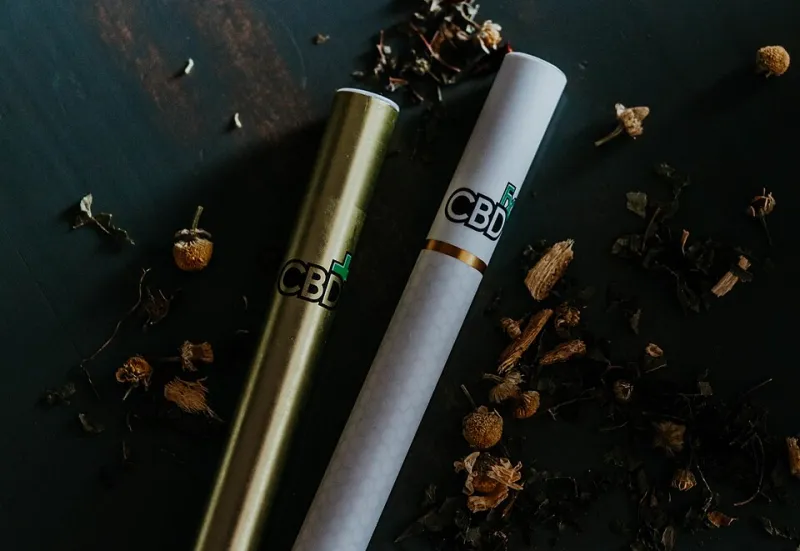
Photo: elsaolofsson, CC BY 2.0, via Wikimedia Commons
Why label literacy matters in the UK CBD market
CBD products sit in an unusual space. They are widely sold as wellness goods, yet they are not licensed medicines and cannot lawfully make medicinal claims. In the UK, many are regulated as novel foods, and the Food Standards Agency maintains a list of products that can remain on the market pending authorisation. For a buyer, this makes label reading a form of risk management. The aim is not to find the most impressive bottle but to identify whether the product is transparent, lawfully positioned and suitable for the person considering it.
The seven claims below are common. Each can be meaningful, vague or misleading depending on the evidence behind it. A clinical-minded approach is to ask what the phrase actually promises, what documentation supports it and whether it changes the risk-benefit picture.
1. Full-spectrum
Full-spectrum usually means the product contains CBD alongside other naturally occurring cannabinoids, terpenes and trace plant compounds. It does not mean the product is clinically superior. It also does not guarantee a meaningful amount of any compound beyond CBD. Because full-spectrum products may contain trace THC, people subject to workplace testing or who wish to avoid THC should request batch-level detail.
Ask for a certificate of analysis that shows cannabinoid content by batch, including THC. A clinical question is whether the added compounds have been shown to improve outcomes at the dose being sold. At present, the entourage effect remains an attractive hypothesis rather than a reliable prescribing rationale.
2. THC-free
THC-free is a strong phrase that is often used loosely. In practice, many products contain trace THC below a specified limit, or the manufacturer may mean that THC was removed to the limit of detection. The distinction matters for anyone concerned about drug testing, pregnancy, driving or interacting with prescribed medicines.
Ask whether the claim is batch-specific and laboratory-confirmed. A responsible seller should be able to state the limit of detection and provide a certificate of analysis. Treat absolute claims with caution unless the documentation is equally absolute.
3. Broad-spectrum
Broad-spectrum generally describes a product from which THC has been removed or reduced while other cannabinoids are retained. It sits between isolate and full-spectrum in marketing language, but there is no single legal definition that guarantees a consistent composition. Two broad-spectrum products can differ substantially.
Ask what was removed, what remains and how the batch was tested. If the product is positioned as THC-free, ask for the same batch-specific evidence. The clinical question is whether the formulation has been characterised well enough for a consumer to make an informed choice.
4. Certificate of analysis
A certificate of analysis, or CoA, is one of the most useful quality markers, but only if it is genuine and relevant. It should relate to the specific batch being sold, not a generic example from a previous year. It should come from an accredited laboratory and show cannabinoid content, THC level, and where relevant, contaminants such as heavy metals, pesticides, solvents and microbials.
Ask for the batch number and compare it with the pack. Check whether the CoA reports CBD per ml or per capsule as well as total content. A CoA is not a clinical endorsement, but it is a basic transparency document. Without one, the buyer is relying on marketing copy alone.
5. Lab-tested
Lab-tested sounds reassuring but says little on its own. Almost any product can be sent to a laboratory for some form of testing. The meaningful questions are what was tested, by whom, against which limits and for which batch. A test for CBD content alone does not confirm purity or safety.
Ask for the laboratory name, the date of testing and the full panel of results. If a seller cannot provide batch-specific documentation, lab-tested should be treated as a slogan rather than a quality standard.
6. Water-soluble
Water-soluble CBD is a formulation claim. CBD is naturally fat-soluble, so products described as water-soluble usually involve an emulsification or nano-emulsion technology intended to improve dispersal in water-based drinks. This may affect absorption, but it does not automatically make the product more effective or safer.
Ask what technology is used and whether the product has been tested for content and stability. Be wary of claims that imply dramatically superior bioavailability without data. The clinical question is whether the formulation has been characterised and whether the dose shown on the label reflects what is actually delivered.
7. Daily dose guidance
Daily dose guidance on a label may be helpful or may encourage overuse. In the UK, the FSA advises healthy adults not to take more than 10mg of CBD per day. Some products are sold in ways that make higher daily totals easy to reach, particularly when drops, capsules or gummies are combined.
Check the CBD content per serving rather than per bottle, and calculate the total daily amount if using more than one product. Anyone taking prescribed medication, pregnant or breastfeeding, or managing a health condition should seek advice from a GP or pharmacist before use. A label cannot assess interactions or individual risk.
The questions to ask before buying
Before purchasing any UK CBD product in 2026, ask for the batch-specific certificate of analysis, confirm the CBD content per dose, check the THC position, look for novel food status and be alert to medicinal claims. A product that is transparent about testing and dosage is easier to assess than one that relies on wellness language alone. None of this makes CBD a treatment for a medical condition. It simply allows a more informed decision about an unlicensed wellness product.