The Cyclical Question: Can CBD Earn a Place Beside Heat and Ibuprofen for UK Period Pain?
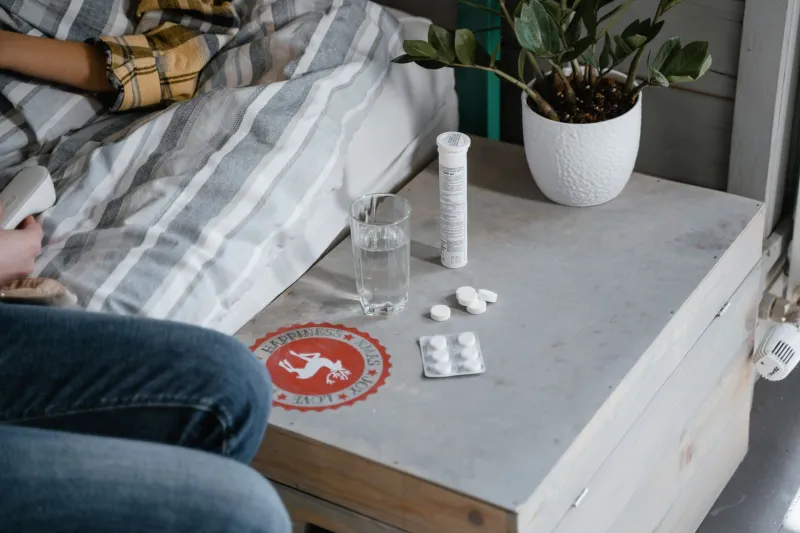
Few complaints generate as much quiet self-experimentation as period pain. Paracetamol is reached for, a hot water bottle is filled, and increasingly a dropper of CBD oil is added to the arrangement. The Hemp Clinic's position is straightforward: this is a reasonable question to ask, but it deserves a careful answer rather than a marketing one. What follows is an attempt at that answer, written for the UK context in which most of our readers will be buying.
Where the evidence actually stands
It is important to be candid about the state of the literature in 2026. There is no large, well-controlled UK trial demonstrating that over-the-counter CBD relieves dysmenorrhoea. Much of the cannabinoid-and-pain research concerns chronic pain of other kinds, frequently uses products containing THC, and often involves doses and formulations that bear little resemblance to a 10 ml bottle sold on a British high street. Small studies of topical cannabinoid preparations for menstrual discomfort exist, but they are short, thinly powered and rarely replicated.
What can be said is that the endocannabinoid system is expressed in reproductive tissue and that cannabinoid receptors and transient receptor potential channels are involved in pain signalling. That is a plausible mechanism, not a clinical result. Plausibility has carried many supplements a long way before now, and readers should treat it as a hypothesis rather than a licence to spend.
Topical comfort and swallowed claims are different propositions
A balm rubbed into the lower abdomen is not the same intervention as a capsule swallowed with water, and the two should never be discussed as though they were interchangeable.
Topical products deliver very little cannabinoid into the bloodstream, which limits both the theoretical benefit and the theoretical risk. Much of the perceived comfort from a warming or cooling balm probably derives from counter-irritant ingredients such as menthol or camphor, and from the massage itself, which is a legitimate comfort measure in its own right. If a topical product helps a woman relax her abdominal muscles alongside a heat pack, that is a modest but real outcome, and it need not be dressed up as pharmacology.
Ingested CBD is a different matter. It undergoes hepatic first-pass metabolism, its bioavailability varies considerably between individuals and between formulations, and dose-response is poorly characterised. Claims that an oil "targets" cramping should be read as marketing rather than mechanism.
The label problem on the UK shelf
Three practical checks are worth making before purchase.
First, confirm that the product appears on the Food Standards Agency's register of novel foods. CBD sold as a food supplement in the UK falls within that framework, and a brand that cannot point to a validated application is a brand to leave alone.
Second, distinguish milligrams per bottle from milligrams per dose. A 500 mg bottle containing thirty servings delivers roughly 17 mg per serving, which is a very different proposition from the headline figure on the front of the carton. Look for cannabinoid content stated per drop or per capsule.
Third, be wary of any product that implies it treats dysmenorrhoea. Over-the-counter CBD is not a licensed medicine, and a menstrual-pain claim on packaging is a signal of weak regulatory discipline rather than of clinical confidence. The only CBD-derived medicines licensed in the UK remain specialist prescription products for specific indications quite unrelated to period pain.
Dosing without chasing a number
There is no established dose for menstrual symptoms, which means any personal trial should be structured and modest. A reasonable approach is to begin in the region of 5 to 10 mg once daily, taken at a consistent time, and to record cycle day, symptom severity, sleep and any adverse effects in a simple diary. Two full cycles give a more honest picture than a fortnight, given how variable menstrual symptoms are from month to month.
Readers should also be alive to the placebo response, which is substantial in pain research, and to the possibility that any improvement reflects better sleep, reduced anxiety or simply the attention of tracking symptoms. None of these is worthless; all of them should be attributed correctly.
Interactions and the medicines cupboard
CBD inhibits several cytochrome P450 enzymes, notably CYP2C19 and CYP3A4, and this matters clinically. Women taking warfarin or direct oral anticoagulants, epilepsy medications such as clobazam or valproate, or SSRIs prescribed for premenstrual dysphoric disorder should discuss CBD with a pharmacist or prescriber before starting. Hormonal contraception is a frequent question; current evidence does not suggest a major reduction in efficacy, but neither is it reassuringly complete.
CBD should be avoided in pregnancy and breastfeeding, where the data are insufficient and the precautionary principle applies. Anyone with liver disease should also seek advice first.
Red flags that outrank any bottle
Menstrual pain is common; it is not always benign. The following warrant a GP appointment rather than a supplement: pain that no longer responds to NSAIDs taken correctly; severe pain beginning after the age of twenty-five; pain during intercourse; heavy bleeding with large clots or bleeding between periods; fever with pelvic pain; sudden severe pain; and symptoms that persist outside the bleed itself.
These features may point towards endometriosis, adenomyosis, fibroids or infection, all of which have established NHS pathways for investigation and management. A bottle of oil must never delay that referral. Where a GP suspects endometriosis, NICE guidance supports onward gynaecological assessment, and delays in diagnosis remain a well-documented problem.
A sensible place in the routine
Heat, NSAIDs taken with food and within their limits, gentle movement, TENS and adequate sleep remain the evidence-based core of self-management. Prescribed options such as mefenamic acid or tranexamic acid, and hormonal methods for cycle control, are conversations worth having with a clinician.
CBD may, for some women, sit quietly alongside these as a low-risk comfort adjunct, particularly in topical form. It should not displace any of them, and it should not be presented as a treatment. The clinical bottom line for 2026 is that the question is legitimate, the evidence is immature, and the GP's door remains the more reliable one to knock on first.