A Four-Week Personal Trial: Recording CBD Dose Without Chasing a Number
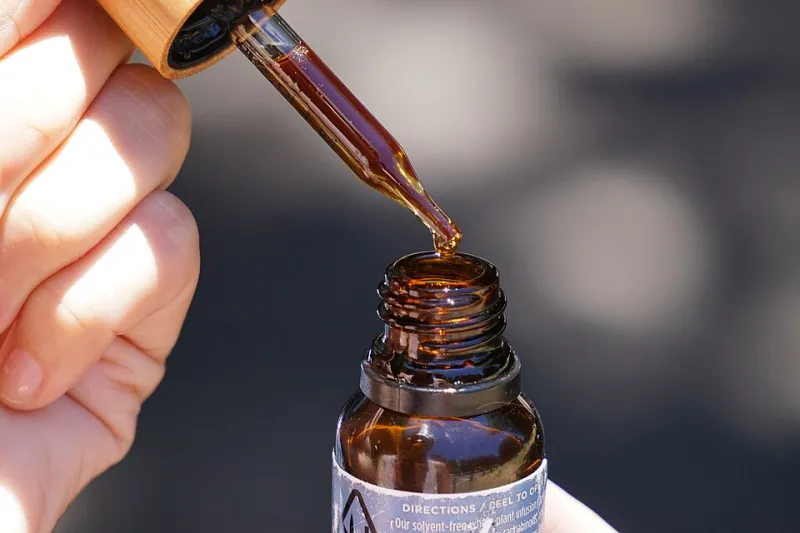
Photo: elsaolofsson, CC BY 2.0, via Wikimedia Commons
CBD is sold in the UK as oils, capsules, gummies and topicals, and the label often implies that a fixed milligram figure will suit most people. Clinical reasoning suggests otherwise. Absorption, body weight, liver metabolism, concurrent medicines, product formulation and the reason for use all vary. The sensible response is not to search for a universal dose but to run a small, structured personal trial, with your GP informed, and to stop if something feels wrong.
Why a diary beats a dose chart
A dose chart assumes that one number can be transferred from one person to another. A diary assumes that the individual is the variable that matters. This is the logic of the n-of-1 trial: a single person, observed carefully over time, with one product held constant and one dose changed at a time. It will not prove cause and effect, and it cannot separate expectation from pharmacology. It can, however, show patterns that a rushed purchase cannot.
The aim is not to maximise milligrams. It is to find the lowest dose that provides a worthwhile, tolerable benefit, or to conclude that CBD is not helping. Both are useful outcomes.
Before week one: establish the baseline
Before changing anything, record seven days without CBD, or on your current stable dose. Log sleep duration and night-time awakenings; anxiety on a simple 0-10 scale; joint comfort or stiffness; mood; appetite; fatigue; headache; and any digestive symptoms. Note other medicines, alcohol, caffeine, exercise and stressful events. Record the product name, batch number, stated CBD content per ml or capsule, any declared THC, and the carrier oil or base. Keep the product constant for the trial.
If you take prescription medicines, especially anticoagulants, epilepsy medicines, immunosuppressants or medicines with a narrow therapeutic index, speak to your GP or pharmacist before starting. The same applies if you are pregnant or breastfeeding, have liver disease, or are under 18. This is general education, not individual medical advice.
The four-week framework
Week one: the lowest practical dose
Use the lowest dose your clinician or the product instructions suggest, once daily at the same time. Do not increase during the first week. Record the dose and the time taken each day. If you notice drowsiness, dizziness, nausea, headache or any mood change that concerns you, stop and seek advice rather than pushing through.
Week two: review, do not escalate automatically
At the end of week one, review the diary. If there is no benefit and no side effect, a small increase may be considered, but only if the product allows accurate measurement and only after checking with your GP or pharmacist where medicines are involved. Keep the new dose stable for seven days. If you already have a worthwhile benefit at the lower dose, stay there.
Week three: steady comparison
Continue the stable dose and compare it with your baseline. Ask whether any change is meaningful in daily life: sleep quality, anxiety before a known trigger, joint comfort on waking, or ability to carry out normal activity. Record side effects as they occur, including dry mouth, digestive upset, palpitations, low mood or unusual fatigue. If side effects appear, reduce or stop. If there is still no benefit and no adverse effect, one further small step may be reasonable for some people, but repeated escalation without evidence is not.
Week four: decide, pause or reset
At week four, make a decision. Continue the lowest dose that appears to help; stop if there is no clear benefit; or pause for two weeks and reset if the diary is confusing or a new medicine has been introduced. Do not use CBD with alcohol to manage anxiety, and do not use it to mask symptoms that are worsening. If you are using CBD for a medical condition, do not let the trial delay a GP appointment.
What to log and how to read it
Keep the record simple enough to complete daily. A single page with date, time, product, dose, sleep hours, anxiety score, joint comfort score, side effects and any notable event is enough. Use the same scales throughout. Look for repeated patterns rather than one good night or one bad day. Be alert to the pull of expectation: a new product often feels effective because it is new. If benefit appears only at a high dose and comes with troublesome side effects, the balance may not be worth it.
When to stop or reset
Stop and seek medical advice for chest pain, fainting, severe dizziness, palpitations, suicidal thoughts, severe digestive symptoms, signs of an allergic reaction, jaundice or unexplained fatigue. Reset the diary after a two-week break if you cannot tell whether the product is helping, or if your medicines have changed. Do not run several new products at once, and do not combine CBD with alcohol or recreational drugs during a personal trial.
Keeping the GP in the loop
Take the diary to your GP or pharmacist. State the product, dose, batch and reason for use plainly. Ask about interactions with your prescribed medicines. A GP may not endorse CBD, but an honest account of what you are taking is more useful than a concealed experiment. Never stop a prescribed medicine in order to try CBD.
A modest conclusion
No universal milligram figure exists. A four-week record, a stable product, stepwise changes, clear side-effect rules and a decision point are more useful than a dose chart copied from the internet. The diary is not a prescription. It is a tool for careful observation, and sometimes the most clinical outcome is to stop.