The Documented Dropper: CBD, Workplace Screening and the Calm Conversation With Your Employer in 2026

Photo: Work Projects Administration Poster Collection, Public domain, via Wikimedia Commons
For many UK employees, CBD sits in an uncomfortable category: legal to buy on the high street, yet capable of raising a question inside a workplace drug and alcohol policy. The useful question is not the blunt one — will CBD fail a test? — but the more measured one: how can a person who uses CBD hold an honest, documented conversation with an employer before screening becomes an issue?
That framing matters. Workplace testing is rarely a clinical assessment of wellness. It is usually a contractual and safety process, shaped by sector, role and employer policy. CBD users do themselves no favours by treating it as either a secret or a certainty. A calm record and an early conversation are more useful than guesswork.
Why a workplace policy is not a clinical opinion
UK employers are not bound by one single statute that says exactly how drug and alcohol testing must work. Instead, policies sit within employment contracts, health and safety duties, data protection law and sector-specific rules. A construction firm, a rail operator, an airline, a haulage company and a hospital trust may all take different approaches.
That is why general reassurance is unhelpful. One employer may test only after an incident. Another may test on reasonable suspicion. A third may run pre-employment or random screening for safety-critical roles. The policy document — not a forum post and not a product label — is the place to start.
A clinical-minded position is equally modest. CBD is not a licensed medicine for general use in the UK, and products vary widely. A workplace policy is not making a judgment about whether CBD is good or bad. It is asking whether an employee is fit for work and whether the employer can evidence that position.
Which UK sectors are most likely to screen
Screening is most commonly associated with safety-critical work: rail, aviation, maritime, road haulage, construction, manufacturing, utilities, emergency services and some roles in logistics and public transport. The common thread is not a moral stance on cannabis but risk to the employee, colleagues and the public.
Office-based roles are less likely to be tested routinely, but that does not mean a policy is absent. Many employers reserve the right to test where there is reasonable suspicion, following an accident or as part of a rehabilitation agreement. Some also screen at offer stage.
For a CBD user, the practical lesson is to know which category you fall into. If your role involves machinery, driving, public safety or regulated operations, assume that a written policy may exist and that occupational health may be involved.
What a test detects — and what it cannot tell your manager
Workplace tests usually look for evidence of drug use rather than impairment in real time. Urine testing commonly targets metabolites, including carboxy-THC, which can remain detectable for days or longer after cannabis exposure. Saliva testing tends to have a shorter window but is still not a live measure of impairment.
CBD itself is not usually the target. The complication is THC. A full-spectrum CBD product may contain small amounts of THC, and regular use can, in some people, lead to a detectable THC metabolite. That is not the same as saying every full-spectrum user will test positive. It is a reason to be careful with claims of certainty in either direction.
A test result also cannot tell a manager why someone used a product, how much THC was present, or whether the person was impaired at work. Those are separate questions. Employers should therefore handle results through a proper process — confidentiality, chain of custody where relevant, and access to occupational health — rather than through corridor speculation.
Full-spectrum, broad-spectrum and isolate: the practical difference
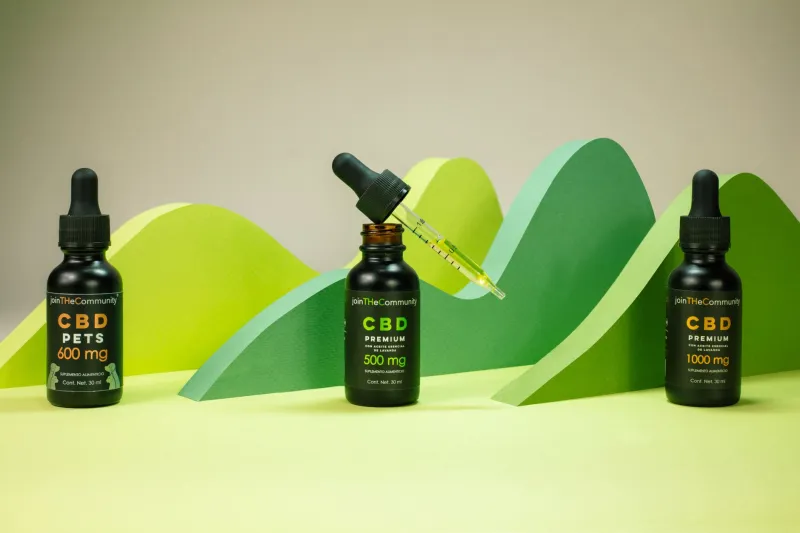
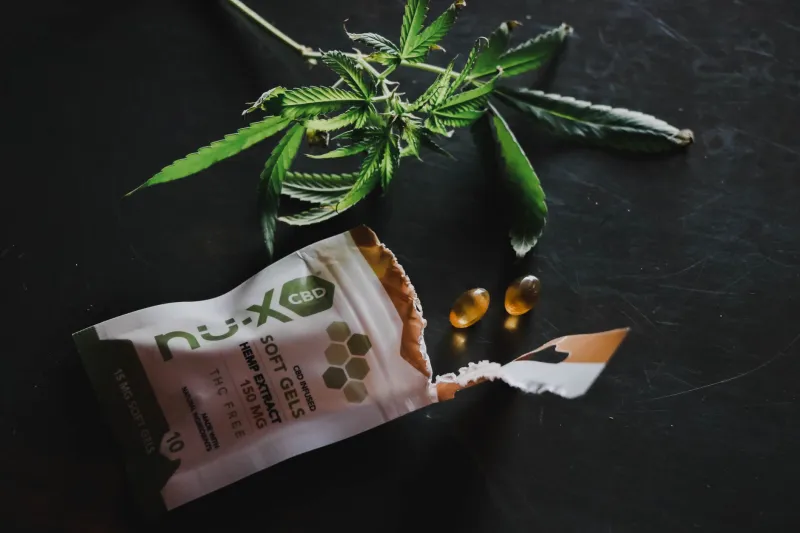
Product type matters, but it is not a guarantee. Full-spectrum oils retain a wider range of plant compounds, including trace THC. Broad-spectrum products are usually processed to remove THC, though manufacturing consistency varies. Isolate products contain CBD alone, but contamination and labelling errors are not impossible.
A certificate of analysis, often called a COA, is more useful than a marketing phrase. Look for batch-specific testing, THC content, and a laboratory that is clearly named. Keep the COA with your purchase record. If a product claims zero THC, treat that as a claim to verify, not a reason to abandon caution.
The conversation before the sample
If you use CBD regularly and your role falls under a drug and alcohol policy, consider raising it before any test is requested. The conversation is easier when it is not conducted in a corridor after an incident.
Ask your line manager or HR for the written policy. Then ask who owns the testing process: HR, a third-party provider or occupational health. Occupational health is often the better route for a health-related discussion because its role is usually to assess fitness for work and advise on adjustments, not to act as an informal detective.
Keep the tone factual. You do not need to disclose a diagnosis or private medical history unless you choose to. You can say that you use a legal CBD product, that you have the batch details, and that you want to understand how the policy applies to your role. Ask whether the employer treats a THC metabolite finding as a policy breach in all circumstances or whether context is considered.
Keeping a record that reads plainly
A written record should be simple and honest. It might include the product name and manufacturer, batch number, CBD and THC content per dose, date started, usual dose and time, reason for use, and a copy of the COA or receipt. Do not fabricate entries or backdate them. The value of a record is that it is contemporaneous and consistent.
A short note in a diary or spreadsheet is enough. If you later speak to HR or occupational health, you can offer a one-page summary rather than a shoebox of receipts. That makes the conversation about documentation and fitness for work, not about persuasion.
If a test is requested at short notice
Cooperate with the process and ask for the policy to be followed. You are entitled to ask what is being tested, who will see the result and how confidentiality will be maintained. If you have a record of CBD use, provide it through the route your employer specifies. Avoid trying to out-argue a test result with internet anecdotes.
This is not legal advice, and individual contracts vary. If a disciplinary process begins, seek advice from a trade union, ACAS or a solicitor with employment expertise.
A measured conclusion
The responsible position for a UK CBD user in 2026 is neither panic nor complacency. Read the policy, understand the limits of a metabolite test, keep batch-level records and raise the issue before it becomes urgent. For employers, the corresponding duty is to apply policies consistently and with proper regard for confidentiality. A calm, documented conversation is not an admission of wrongdoing. It is simply good workplace hygiene.